


Episode Transcript
Move To Tacoma – Palmer Scholars
===
Malachi Cabera – Palmer Scholars: [00:00:00] This is Channel 2 5 3. Move to Tacoma. On this episode of Move to Tacoma,’ they wanted to ask the scholars question. Mine used their first day, and the money part was last, like the way that these students were answering the questions were. It’s like somebody will be like, well, what is your favorite part about Parmer Scholars?
And they’re like, oh, the community, the friends, the staff, the support. So the money, the financial part is still something that that is important, but the sense of community is even greater amongst our scholars right now.
Producer Doug Mackey – Channel 253: Channel 2 5 3 is member supported. I’m producer Doug Mackey, and I hope you’ll show your support by going to channel two five three.com/membership.
And join. Thank you. We are back. Move to Tacoma. Move to Tacoma. Move to Tacoma. You’ll like
Marguerite Martin | Move to Tacoma Host & Tacoma Real Estate Agent: it.
Producer Doug Mackey – Channel 253: Move to Tacoma. Move to Tacoma. Move to tacoma.com.
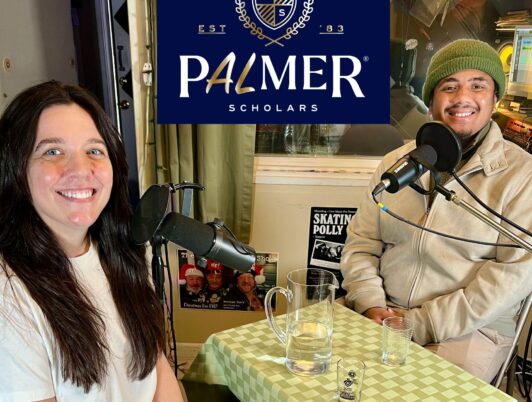
I’m Marguerite with move to tacoma.com. And I’m here today with Malachi Cabra. Yes. [00:01:00] From Palmer Scholars. Welcome Malachi.
Malachi Cabera – Palmer Scholars: Thank you for having me. It’s an honor.
Very glad to have you here. Uh, first I will ask you when you moved to Tacoma and why.
Malachi Cabera – Palmer Scholars: So I moved to Pierce County in 2011, uh, because of the military. My stepfather was, um, a active duty soldier, and j Blin was his last duty station. Mm. Uh, so grew up in Parkland, right on the outskirts of Tacoma. Growing up, I always thought I was into Tacoma until I got a reality check when I actually moved into the city in 2022.
So then. Um, formerly in Tacoma for, um, over, over three years now.
I mean, there are some parts of Parkland that are technically Tacoma, right? Like the, the Parkland. Isn’t there overlap between Parkland and Tacoma?
Malachi Cabera – Palmer Scholars: No. So Parkland is unincorporated Pierce County. Oh. Um, so you can use, like, if you’re mailing something, you can still put Tacoma on your Parkland address.
Got it. And it’ll still go to the right location. Uh, but Parkland, it’s its own separate neighborhood. It’s its own thing. Um, but. Again, when I was like in [00:02:00] school and growing up, I would always put like Tacoma or parking lot. I would like go back and forth. So I was like, I don’t know where I am until I, I learned about the different boundaries, um, later.
But uh, yeah, so I feel blessed to actually be within the city officially.
Okay. And what neighborhood are you in now?
Malachi Cabera – Palmer Scholars: Uh, in the South end, so, okay. South End Tacoma, uh, right near the Fred Meyer that just recently closed, unfortunately. Mm-hmm. Um, so that was unfortunate. But South End is a beautiful neighborhood with lots of culture and I just love how.
Intimate It is, I feel like everybody knows each other and my numbers are all wonderful. So I don’t foresee myself moving out of, um, at least the southern part of Tacoma anytime soon.
So there’s the South end and then there’s South Tacoma. Yes. And sometimes people mix them up. Do you feel qualified to tell people the difference between the South end and South Tacoma?
Malachi Cabera – Palmer Scholars: So south and, um, how can I explain it?
This is a very advanced question. So Malka, you’re, you’re very brave to take it on.
Malachi Cabera – Palmer Scholars: Yes. [00:03:00] So South and so think of Wapato Park, right? Yes. Wapato Park is part of South and Tacoma on
the east side of I five.
Malachi Cabera – Palmer Scholars: Exactly. Mm-hmm. And then South Tacoma is always like simplified by saying, think of like the mall district.
Um. Past 56 area. Yeah, yeah. Um, that’s like South Tacoma, but in South End it’s like Wapato and then Fred Meyer approaching 96 as you enter Parkland. Yeah. So that’s, that’s uh, south End Tacoma. So there is a difference. It’s two different neighborhoods and, um, people take it very seriously. So I, I appreciate you
taking the time to clarify that for us today.
Yes, thank you. As a, as a South End resident yourself.
Malachi Cabera – Palmer Scholars: So if you join any of the South End neighborhood Tacoma Council meetings, uh, they can, they will definitely break it down for you a lot more and will be like, Nope, we are not South Tacoma. We are South End. And I love it. Yeah, I love it. They’re, they’re proud of who they are and where they live, so who can complain about that?
Right. That’s awesome.
So I was approached by someone at [00:04:00] Palmer Scholars to have you in to talk, and I have to like, confess straight from the start. I, I don’t really, I, I don’t really know what it is. Well,
Malachi Cabera – Palmer Scholars: what is,
what is Palmer Scholar?
Malachi Cabera – Palmer Scholars: Well, it’s, it’s, it’s a good thing that you have me on here, right? Yeah, exactly.
I mean,
like, we’re learning together. We are, we’re gonna all
Malachi Cabera – Palmer Scholars: learn together, right? Um, so Palmer Scholars is a nonprofit that’s been around since 1983, okay? And it started, uh, in Tacoma by Reverend Al Davis and Merl Palmer, um, a black man and a white man. And they had this same agreement that. We need equal access opportunity for young adults of color to, um, get their education.
Marguerite Martin | Move to Tacoma Host & Tacoma Real Estate Agent: Hmm.
Malachi Cabera – Palmer Scholars: So in their living room, kitchen, dining room, wherever it was, they, uh, came and just started writing checks. To, uh, students of color. So the first Palmer Scholars were two adults, young adults at Lincoln High School, and they received scholarship checks from Mo Palmer and Al Davis and e eventually blossomed into this beautiful organization that we see today.
So we [00:05:00] still carry out that same mission, um, and we still carry out the same program called Palmer Legacy. Right now we have three programs, so bear with me for a little bit. Okay. So Palmer Legacy is our scholar, um, scholarship. And college readiness program. So in there, they are recruited in their junior year of high school.
Got it.
Malachi Cabera – Palmer Scholars: And in their senior year of high school, they o um, go over various training. So FAFSA training, how to apply for college, um, different colleges in the area. Yeah. What’s the difference between a two year college and a four year college? Mm-hmm. So they go all over that, um, within their senior year of high school.
Um, it’s like their bootcamp, if you will. Yeah. Before entering into college,
everybody college is graduating high school.
Malachi Cabera – Palmer Scholars: Yeah, and it, and it’s have that and it’s so amazing ’cause people, people think like, oh, like people know what FAFSA is or know how to apply. There are tons of students out there that just simply don’t know.
So we step in and we show them. Um, and it’s [00:06:00] phenomenal just to see the growth throughout the years. Um, so once they graduate from high school, we then still follow them for their four year, uh, journey into college where we provide mentorship, um, and assistance to make sure that they have what they need to thrive, um, in their college experience.
So we have served over, um, at this point, I believe it’s approaching 800 scholars since Wow. Since 83. Wow. And we have a vast list of just, um. Now adults that we’ve impacted. So it’s amazing to see, just be like, oh, you was a Parer scholar. Now you’re working at, you know, Microsoft or the Gates Foundation, or still in Tacoma, within the school district.
So there’s so many stories of people that got impacted by Palmer Scholars from the eighties till now.
So again, I mean, I have so many questions, but the first question is like, I mean like how much, how much money are we talking about? Like, I mean. College talks. Mm-hmm. It costs a lot. Right. So is it like they go through the program and then they get awarded their senior [00:07:00] year and they get a thousand bucks?
Or do they get like $50,000 to go to UPS? Like what, how does it work? And then, and then where do you all get that money from? I assume it’s not too. Guys writing checks in their kitchen anymore, right? No. Like how, how does this all work?
Malachi Cabera – Palmer Scholars: Um, so right now we, we are in a process of reinventing the Legacy program just to make sure that it still equips the needs of our students.
But typically how it worked was, uh, the students get $3,500 every year. Um, $2,500 was the scholarship, and a thousand dollars was for a stipend, like for books, um, computers, uh, groceries, uh, deodorant, like whatever they need, right? Yeah. Um, so that’s how that worked every year until they graduated high school.
So now we don’t have people writing checks in their dining room table for the most part. We still, we still have a lot of individual donors, but, um. And it’s not just come from two people anymore. Right, right. But that, that program is primarily fueled from individual donors, not Palmer. Now, Davis, [00:08:00] unfortunately, they passed away, um, and foundations.
So, um, it’s, it’s a, it’s an interesting journey just to see the growth of like, be like, oh yeah. I can write you a check or, you know, our know this foundation, but that’s how that program is funded.
So if a, if a student is graduating from high school to go to college and they, they select, let’s say like uwt.
Mm-hmm. Which I, I admit I did not Google this before, but I imagine like to attend school and housing, that’s probably 25 or $30,000. And they’re gonna app, they’re gonna get the support from Palmer Scholars to use a FAFSA to apply for aid, to apply for financial assistance or loans. The Palmer Scholars money is, is it, what is it used for?
You said Some of it’s used for groceries. Mm-hmm. And what was the other part of it used for?
Malachi Cabera – Palmer Scholars: And averse will be used for tuition. For tuition? Yes. Okay. So some of of it
goes towards their tuition. Um, and then some of it goes towards. At the expenses of life.
Malachi Cabera – Palmer Scholars: Exactly. Right. Whatever they need. Mm-hmm.
And how has the [00:09:00] need that you see from these scholars, how has it changed over the years?
Like Yeah. Is is, is there any like conversation about what those funds are best used for? Or is it like, no, we’ve always done this way and they love it?
Malachi Cabera – Palmer Scholars: Yeah, so the program has evolved over the years. I think we’re now in a point where we’re starting to really put the scholars first in terms of like, what do you need?
Or what do you want? ’cause. Um, and the biggest thing that we’re, that we’re hearing is just a sense of community.
Marguerite Martin | Move to Tacoma Host & Tacoma Real Estate Agent: Mm. Um,
Malachi Cabera – Palmer Scholars: when we just had a current, uh, high school cohort start, uh, towards the beginning of the summer of the summertime and be, before they even knew each other, before they got to know the staff myself, um, we had an, an open house, meaning that we had just people from the community just come in and learn about the program.
Like, just like how we’re doing right now. Yep. And they wanted to ask the scholars question. Mind you, it’s the first day. And the money part was last, like the way that these students were answering the questions where it’s like somebody would be like, well what is your favorite [00:10:00] part about Parmer Scholars?
And they’re like, oh, the community, the friends, the staff, the support. So the money, the financial part is still something that, that is important, but the sense of community is even greater amongst our scholars right now. ’cause they actually know who to go to and who to call. Yeah. Um, ’cause. It’s a crazy world we’re living in.
Right?
Well, and it’s so complicated and I mean, there’s a lot that’s said about, oh, it’s complicated if you’re a first generation student. Mm-hmm. But even if, like, I’ve gone back to community college multiple times as an adult, and every time I’m like, how does any young person do this? Right. Because.
Filling out a fafsa, it’s complicated. That program kicks you out all, you know, oh, you need to get this form, or you need to get that form, or, oh, there’s an error. You have to call this person. You have to go in in person. You have to get this form. Like it is getting your transcripts from one place to go to another.
Like it’s a complicated process to engage with higher education. Yes. And I imagine just having a community of people where you can be like, has this ever happened? How do you do this? I, I seen, I, I feel like naive for being like, well, wait, how much money is that? [00:11:00] Enough money? ’cause you’re like, no, actually, the, the, the real help is the community that’s gonna help
Malachi Cabera – Palmer Scholars: you get through all these obstacles.
Yep. Yep. And one thing to note, while in the program, they still get, um, the support from our team and our staff, but they’re also required to at least fill out six other scholarships while in the program. Ooh. And so, um. Almost 90% of our scholars graduate from college with $5,000 or less in student loan debt.
Because you’re helping them figure out how to get other forms of aid.
Malachi Cabera – Palmer Scholars: Exactly.
Ah, that’s so interesting. ’cause yeah, it’s always so intimidating when you look at scholarship application forms,
Malachi Cabera – Palmer Scholars: right?
It’s like, oh, do I really qualify for this? Is it, am I really the person that’s supposed to do this? Is there even any point?
It’s $2,000. It’s $3,000. We just need an extra
Malachi Cabera – Palmer Scholars: push to like even do it, right? Yeah. What do I write
in this E? What do they wanna hear from me? Yeah.
Malachi Cabera – Palmer Scholars: Yeah. So that’s something that, that we require. Require and yeah, a lot of our scholars, they’re like, wow, like I thought this was like normal. Like, [00:12:00] no. Like we have folks out here.
I think the average student loan debt, if I can remember off the top of my head, it’s almost around $40,000. Right? So I. Or more. I was gonna, I mean, like if you actually
get a degree, I think you usually owe more than that.
Malachi Cabera – Palmer Scholars: So I, I, uh, I may be wrong pulling that, that number off the top of my head, but having the scholars graduate with $5,000 or less is incredible.
Is life changing, uh, for a lot of them. ’cause again. You mentioned first generation. Some of are scholars are first gen. Yeah. So this is the first time going to school, and so they’re supporting their family. Right. So getting a high wage job, that’s the end goal of all of our programs, is to make sure that they have family wage careers.
So who’s allowed to be a Palmer Scholar? Like who’s allowed to apply to the program?
Malachi Cabera – Palmer Scholars: For the legacy program, you have to be a junior in high school. Mm-hmm. Um, just so you can do the trainings in your senior year.
Marguerite Martin | Move to Tacoma Host & Tacoma Real Estate Agent: Mm-hmm.
Malachi Cabera – Palmer Scholars: Um, and you have to live in Pierce County, you know, be eligible to work in the us um, and be an underrepresented student.
Marguerite Martin | Move to Tacoma Host & Tacoma Real Estate Agent: Mm-hmm.
Malachi Cabera – Palmer Scholars: Whatever that looks like to them. [00:13:00] That, that’s, that’s up to them. So if they’re low income, if they’re a person of color, if they’re, um, you know, um, have a disability, right? Mm-hmm. So underrepresented is, is the key, is the goal. Um, ’cause that’s the, the population that we’re trying to target to get those opportunities.
And how many people do you usually help in a year? Is it like a cohort? Is it like a class of people that go through? How, how many is usually in that cohort for the legacy?
Malachi Cabera – Palmer Scholars: Right. So, uh, cohorts are typically 25 students. Mm-hmm. In, in high school. So that’s every year, uh, for, for Legacy. Um, and that’s
across Pierce County
Malachi Cabera – Palmer Scholars: and that’s across Pierce County.
Got it. Okay. So last, uh, recruitment cycle. Um, our legacy team, they actually went to every single high school, Tacoma, public Schools and beyond.
Wow.
Malachi Cabera – Palmer Scholars: Um, and so we had, ’cause typically it was very, it was Pierce County wide, but it was very Tacoma based. Mm-hmm. And so we, we got into the state where we started to branch out and now.
You know, we have school, uh, students from all across the county that we help serve, so
that’s fantastic. How many [00:14:00] people apply to get in if only 25 can do it?
Malachi Cabera – Palmer Scholars: Yeah. So I’m like, oh,
should I even ask this question?
Malachi Cabera – Palmer Scholars: No, it, it’s, it’s a good thing, right? It, it’s a good problem to have. So, yeah. We definitely seen an increase of applications over the years.
Um, I know when I first got hired two years ago, the legacy team was just right in the middle of the recruitment season. Mm-hmm. And they had over 200, uh, applications. Wow.
Okay.
Malachi Cabera – Palmer Scholars: Uh, this last recruitment cycle there was over 300. So the need is starting to, for one, the recruiting, um, and the outreach is starting to get greater.
Yeah. Um, but with that comes, uh, more applications and a greater need in, in general, so, right. We are starting to see an uptick of applications.
So these people, young people know when they apply that, like only one in 10 people really get in.
Malachi Cabera – Palmer Scholars: Yeah.
And then on the funding side, you’re funding this from, you said foundations and individual donors, right?
Writing checks.
Marguerite Martin | Move to Tacoma Host & Tacoma Real Estate Agent: Yep.
Is there, okay, so you keep talking about legacy, but you also are talking like there’s other things. So I’m, I’m imagining like if you don’t get [00:15:00] into that program, is there other resources that the organization offers those? Those folks that applied? Yeah.
Malachi Cabera – Palmer Scholars: Yeah, absolutely. So, um, legacy is one of three programs that we have.
So we also have a pre-apprenticeship program called Palmer uh, pathways. Mm. And that was, uh, started in 2019, uh, right before COVID. So our first cohort was, uh, virtual with five students. Um. And we are starting to see a great need in that arena as well. ’cause Pierce County is starting to have such a, uh, high, uh, need for construction workers.
Right. And so we decided to start that program.
And this is just all different trades. Do they have to be going into any specific trade or is it like, doesn’t matter if you’re a pipe fitter or an elevator repair technician or a sheet rocker, like you’re good to go.
Malachi Cabera – Palmer Scholars: Right. So it’s, um, since we’re a pre-apprenticeship, we go over all of the 18 different construction union trades.
So in the program, it’s 15 weeks long, um, and it’s 18 to 24. So it’s for [00:16:00] young adults. Mm-hmm. Um, and, and they go over every single, not every single. They go over a majority of the trades.
Marguerite Martin | Move to Tacoma Host & Tacoma Real Estate Agent: Yeah.
Malachi Cabera – Palmer Scholars: And we actually invite, invite union, um, apprenticeships to come into our classroom and be like, Hey, like this is what a cement mason looks like for a day.
Right, right. This is what electrician looks like for a day. And they also do something called try trade field trips. Oh. And so they actually go out into the field and get to experience what it’s like to, um, you know. Uh, be in a certain trade of, of, of their choosing.
And how many people are approved for that?
Is it a cohort still?
Malachi Cabera – Palmer Scholars: Yeah. Yeah. So it’s every 15 weeks and it’s 25 students per cohort. Okay. Um, so that’s going on year, year round. Um, and the biggest highlight of that program is that they actually get to build their own tiny home.
Oh, that’s cool. And
Malachi Cabera – Palmer Scholars: so it’s very hands on. Yeah. Because in the field, you know, you’re gonna be outside and mm-hmm.
Whatever conditions, like right now it’s, it’s raining today. They’re still outside building. Yeah. Building a tiny home. But we wanna make sure that it is, [00:17:00] um, uh, reflecting what it’s like to actually be in the field. Absolutely. So that’s a really, absolutely, really cool program that we also do as well. Um, and again.
Every, every time there’s an outreach, uh, for, there’s multiple applications. So it’s starting to get a little more competitive, but we’re making sure that we’re still trying to, uh, hit the population that, that we wanna serve, so.
Awesome. And then you, did you say there was one more program that you have?
Malachi Cabera – Palmer Scholars: Yeah, so GSI stands for Green Stone Water Infrastructure, um, and that is our environmental services program. So that was started, uh, last year, October actually. Um. And that first cohort had, uh, 10 students. So it was similar to Pathways, just a little, little different, um, similar model. So it was eight weeks long cohort style, and they actually got to be out in, uh, the field when it comes to environmental services.
So, mm-hmm. They got to see, um, greenhouses. But the City of Tacoma, um, [00:18:00] uh, um, why am I blanking on the name of the manholes? The, the Stonewater. Um. Where, where you like lift up the manholes and see like, is that the manhole? The, the, the sewage and Oh, like
the stormwater drains? Yeah, the
Malachi Cabera – Palmer Scholars: stormwater drains.
Yeah. They, they got to see that and it was, I, so I got to go on a field trip with ’em, and one of the, the, one of the people from the city of Tacoma actually like lifted it up and was like, yeah, so this is like 40 feet down, but we have one that’s. Even deeper. And all you saw was like nothing. I’m like, I don’t know how you guys do this, but I hope you’re making good money.
Which they are.
Marguerite Martin | Move to Tacoma Host & Tacoma Real Estate Agent: Yeah.
Malachi Cabera – Palmer Scholars: Um, so that’s what that program goes over. Just how to make sure that that, uh,
very cool. You know,
Malachi Cabera – Palmer Scholars: that we’re still being environmentally sustainable. So that’s another cool program that we just started as well.
Awesome. Well, we’re gonna go ahead and take a break and then I’ll be back with lots more questions from Hawkeye about Palmer
Erik Hanberg | Channel 253: Scholars.
This is Eric Hanberg with Channel 2 5 3. I’m Doug Mackey and Doug Mackey asked to keep this short. So here it [00:19:00] is, $4 a month, $40 a year. Supports Channel 2 5 3. Go to channel two five three.com/membership. More so we’d like to thank our members, especially our long time members. Now it’s too long move to
Tacoma.
Alright, we’re back with Malachi from Palmer Scholars. Yes, thanks for being here, Malachi.
Malachi Cabera – Palmer Scholars: Yeah. Again, thank you for having me. It’s, um, I must say this is probably one of the most. Comfortable interviews I’ve ever been in so far, so, oh,
thank you. Wow. This is very nice. I, I was just saying to Mal Kaya during the break that he should have his own podcast because you have, you have good podcast, uh, skills.
I’m curious when, when you look at Palmer Scholars and like what it has been. I think the need. Mm-hmm. How do, how do I get into college? How do I find a job, you know, in a skilled trade, like that’s a mysterious process. What even is, like, we were talking like what’s a manhole cover? What’s under a manhole cover?
There’s an entire profession that services a world that most of us don’t even really think about. So certainly when we’re choosing a profession, we don’t know that that’s an option unless we have a family member. [00:20:00] Like what do you see this organization’s role in helping people in Tacoma find sustainable employment That, Hmm.
Satisfies them. That is what they want.
Malachi Cabera – Palmer Scholars: Yeah. I say it as a connector, um, to your point, especially with skilled trades, it was such a, um, who, you know, in industry, right? A hundred percent. Especially when it comes to, to union. So yes, when we saw, and again, I mentioned earlier how the need is always evolving.
Skilled trades was something that was, uh, a hot topic. Um, yeah. And it still is of how do you get into it? Um, I don’t think people realize that there’s 18 different construction unions and in those, within those unions over 600 positions. So it’s not just, you know, putting a piece of blocks together with a screwdriver, right?
It’s, you know, the pipe fitters, it’s the elevator operators, it’s, uh, cement masons, iron workers, right? Um, and so I see Palmer Scholars as that, um, connector to show folks like what is possible, um, when you’re, when you’re curious really. Um. [00:21:00] The reason why we’re here today is to increase the visibility of Palmer Scholars.
’cause you know, when we first got on you was like, well, what is Palmer Scholars? Right? Um, and I think that curiosity of, of asking like, what is Palmer Scholars and what we do opens up a lot of doors for the people that know about it. And so we’re trying to get to that point of, of building our, um, our clout, if you will, our reputation.
Right? So, so in an ideal world, there’s. Students watching going like, oh, is this something that could help me? Mm-hmm. And potentially, obviously like parents or, you know, parent figures in younger people’s lives who are trying to get resources to someone that they see as like needing support. Right. Uh, what, what obstacles are you seeing out there?
I mean, you’re one little organization, right? Mm-hmm. You can’t help everybody, but what are the obstacles that you’re seeing that students are facing?
Malachi Cabera – Palmer Scholars: Yeah, I think the biggest obstacle is transportation.
Oh, I did not expect you to say that.
Malachi Cabera – Palmer Scholars: Yeah, I, I think the biggest obstacle is transportation. Um, how do you get to and from class, how do you get to [00:22:00] and from work?
Right? So in the program and all our programs, we offer something called supportive services. So Legacy, they get that thousand dollars, right? Mm-hmm. So there’s Pathway students and so there’s GSI students to get a fund dedicated, uh, specifically for them to help break that obstacle. So like in you, they can get gas cards, they can get bus passes.
Mm. They can even get rental assistance. You know, if, if housing is, is an issue. Um. So by, I think the biggest one would be that transportation of making sure they have reliable, uh, a reliable commute.
Well, and for people that might be watching this, that maybe don’t have a young person around right now, is transportation an issue because kids just don’t wanna get their driver’s license anymore and kids just don’t wanna drive?
Or is it. Is this an issue of eco economics and poverty? Like what, what is really, is it just that we live in a big county with mm-hmm. You know, medium public transportation? Like what is the culprit there?
Malachi Cabera – Palmer Scholars: I would say a, amongst our students, it’s a bit of a blurred line. ’cause everybody has their own, [00:23:00] um, stuff happening at home that, you know, we may not be privy to.
Right. Um, so we really just try to get to the root cause of like what’s happening and how we can help. Um, ’cause a lot of our students, um. You know, can be low income or, uh, may not be able to afford a car at the moment. Or even car insurance, you know, sort of like, I don’t wanna drive uninsured. Right, right.
Of course. Um, so it, I guess our biggest thing is not, um, is not to have that barrier hold them up from success. Mm-hmm. Um, so we’re always looking to see just. You know how we can, for one, get more funding for supportive services, and two, making sure that we’re building a relationship with, with that student to provide them the need that they deserve.
That’s great. What do you, what do you think, um. Older people don’t understand about kids these days?
Malachi Cabera – Palmer Scholars: Um, I, I would, I would say I, I think the message is usually the same [00:24:00] amongst, um, all generations. Like, oh, kids don’t wanna work, you know? Yeah. I don’t think, it’s not kids not wanting to work or just being lazy.
I, I think it’s, um, making sure that they have the opportunity or have, um, the support to get where they wanna go, you know? Yeah. I’m a prime example of that. I mean, I’ve been a hard worker all of my life and, but I didn’t just wake up one day and be like, oh, I’m gonna start a business at 16. Right. I’m right.
I woke up and was like, let me ask questions and price the support or get the support that I need to, you know. Make a landscaping business, which I did. Oh. Um, and I think that’s something that I’m starting to see just amongst, um, Palmer Scholar students in, in particular is, is, um, giving them the opportunity to voice what they actually wanna do.
Mm-hmm. And then backing that up with support.
I think something that I’ve observed, you know, I have nieces and nephews and also aunts and uncles. You know, I’m like in the middle of some generations and I, I feel like sometimes people misunderstand young [00:25:00] people not wanting to do things the same way that.
Maybe generations did them before. Before them, right. As meaning they don’t wanna work or they don’t wanna try, or they don’t. You know, they don’t have any motivation. Right. Like I, I don’t think that’s exactly it. I think the systems have all changed and the young people are trying to navigate it with maybe not always the right advice coming down.
Like the experiences that their parents or grandparents had mm-hmm. Might not actually apply. Right. Even around something as simple as applying for school. Right. Right. How have things changed?
Malachi Cabera – Palmer Scholars: I, I think one of the, the biggest things that I hear is like, oh, like, show up to a job and with your resume, you know, like that type of, um, tactics.
Just,
just show ’em some gumption. Yeah. Like, it just, it
Malachi Cabera – Palmer Scholars: just doesn’t work, you know? Um, in 20, about to be 20, 26, like Yeah, indeed. For one, it’s all automated, you know, monster, all the resume builders, it’s all automated. Well,
when you say automated, you mean it’s not even a. Person looking at the application anymore, right?
No. A lot of older people don’t know that.
Malachi Cabera – Palmer Scholars: Right? Right. So it’s just harder to just show up on somebody’s [00:26:00] doorstep with a resume. It’s like there’s so many obstacles that you have to hurdle through. Like one things that we do in our, um, cohorts is, is do interview prep.
Marguerite Martin | Move to Tacoma Host & Tacoma Real Estate Agent: Yes. Because a
Malachi Cabera – Palmer Scholars: lot of, a lot of, uh, young adults, um, you know, a lot of our students.
This would be like the first interview. So just showing up to an interview and you know, it makes all the difference every generation. Right. You
haven’t interviewed until you’ve interviewed. Right. That’s so smart to do interview training.
Malachi Cabera – Palmer Scholars: Right.
And are these interviews that they have to do for jobs or for scholarships or for both?
Malachi Cabera – Palmer Scholars: Uh, in some cases both. Okay. So Legacy. In the Legacy program, we do have interviews just to, you know, make sure that this is a qualifying student for the program. And, um, while they’re in a program across all our programs, so GSI, pathways and Legacy, they do something called mock interview. Mm-hmm. So we actually invite, uh, real employers and community or people with, um, interview and experience to, um, have a, a mock interview with our scholars.
So in our Pathways program, we invite, uh, construction based, um, [00:27:00] uh. Workers or people in the field, um, to come in and interview in GSI, we try to target environmentalists. Mm-hmm. And a legacy depending on, um, you know, what, what need that they have. Uh, we try to match them up with, uh, a mentor who has, um, uh, experience of like in our current cohort.
Being an attorney is like the big thing, right? Mm. So, um, I’m out in community speaking with, uh, law firms to be like, Hey, like, can you connect with our students? Ah, um, so they, they, they can also get, um, advice from their mentors as well.
Is there any field that you’ve had a little trouble finding mentors from?
Where you’re like, we’re always seeking people from this profession. Or are you, do you have a pretty easy time finding people that wanna help young people?
Malachi Cabera – Palmer Scholars: I would say we, we just have a need for mentors in general. So we, we are, are, um, actually in the recruitment for mentors right now. Oh. So if anybody listening wants to be a mentor, what makes a good mentor?
Like what, what qualifies you?
What do you have to have? What, what, what, what to have, what it takes to be a mentor. I would you
Malachi Cabera – Palmer Scholars: say just be a compassionate adult who has patience for our [00:28:00] students.
Is that enough?
Malachi Cabera – Palmer Scholars: I would say right now. Okay. Yeah. Yeah, I, I think it is enough. I think we really just need, um, adults who are willing to, um,
no criminal background.
I was like, you must have some criteria, right? As far as that. I didn’t mean to be suspicious about compassion. Sorry.
Malachi Cabera – Palmer Scholars: But, but yes. Um, we, we do do a background check on our mentors just to make sure that there’s nothing Right. Uh, you know, suspicious. Right. Or, or shady. Right. Yeah. Um, but as far as like, um. Uh, getting matched with a student.
Right. Um, I would say we just need adults who are willing to listen, willing to learn, and also, um, who are engaged. I think one of the, uh, the things that our students really need is just, um, consistent, um, adults showing up. So whatever that may look like for them.
Yeah. Does that mean like giving them a lift?
Does that mean connecting them with people within their profession? What is, what have you. Yeah.
Malachi Cabera – Palmer Scholars: And, and to be clear, like we’re not expecting our mentors to be their parents. Right? Right. We’re expecting our, our mentors, uh, [00:29:00] to just be an additional arm of support. Um, so like our students, they’re all across the country, so some of our mentors, they do quarterly check-ins with our students.
Like right now, for example, we have a student in Yum, uh, excuse me, not Yale, Washington and Yale. Um, Yale, the
university, Yale the University. Oh, wow.
Malachi Cabera – Palmer Scholars: Um. And so, uh, obviously somebody in Washington is not gonna go to Yale University to do a check-in, but, uh, you know, make sure that they’re, uh, uh, calling, texting, or just having some form of consistent communication Yeah.
That matches what that student’s needs, is what we’re really looking for. So, if you’re compassionate, if you’re communicative, and if you’re engaged and wanna help a young person life. Then you can be a mentor for Palmer Scholars.
Mm-hmm. That’s very cool. And how much of a time commitment is that? Like what do you typically see?
I mean, is this, is this just like the odd text and the odd meetup or is it like, no, we actually have some different things we want you to commit to here?
Malachi Cabera – Palmer Scholars: Yeah, so it is a time commitment. Um, I would say, um, [00:30:00] if I had to give like an hour range, maybe. Five hours a month. Okay. You know, somewhere around there, if not more depending on the student’s needs.
Mm-hmm. Um, we, we really, we wanna make sure that they have the, the template to be a successful mentor, but we don’t wanna limit what that can look like between the student and That makes sense. And the mentor. Yeah. Um, ’cause each need, you know, can be different. So.
Okay. Well that mentor thing kind of came outta nowhere.
What else do you guys do?
Malachi Cabera – Palmer Scholars: Man, we, we, we do a lot. Yeah. We, we do a lot. So I, I know I threw a lot of information at you. Um, to backtrack a little bit, is there anything that you would like me to clarify before I dive into some of the No,
no, this is good. I just feel like I, like, I, I think like the place that my head always goes is like, oh my gosh, like, how are you paying for this?
But you say foundations and individual donations, but I imagine if you have. You know, 25 spots and 300 people applying, you’d probably like to grow the program. Yeah. I don’t wanna presume, but like, what does that look like? Like what would you [00:31:00] need from the community as far as support in order to be able to continue to offer this and grow it?
Malachi Cabera – Palmer Scholars: Yeah, absolutely. Right now, the greatest need, um, is individual donors. Um, like most nonprofits, we’re not a stranger to, um, uh. Facing financial in insecurity just because of Right. What’s happening right now. Right. Um, so we, we are making a push for our, to grow our, our individual giving, um, to, to help support the legacy program specifically.
’cause that program is what relies on individual donors and, and foundations. Um, so. We are doing our end of year campaign right now.
Oh, okay. Classic.
Malachi Cabera – Palmer Scholars: Right. Um, so if, if anyone listening is interested in, in donating to our end of year campaign, please do low
tax write off. Yeah. If we can.
Malachi Cabera – Palmer Scholars: Um. We, it is a tax write off and it’s on our website, palmer scholars.org, and it’s the first thing that pops up, so it’s gonna flash you.
It’s hard to miss.
Yeah. Do you do any, uh, other [00:32:00] events that are fundraising related throughout the year? Do you do, like, some people do, like luncheons mm-hmm. Or other kinds of events in the community? Do you have something like that that you do?
Malachi Cabera – Palmer Scholars: I’m glad you asked. Oh, so March 26th saved the date. For everybody listening, we are gonna have our standup and cheer, uh, annual fundraiser.
So standup and cheer has been going on for many, many years now. Um, and we just moved it up a little bit. So March 26th will be the date at the McGavick Center. Okay. Um, it’s gonna be our annual fundraiser.
And is that, sorry, was that a luncheon or a dinner?
Malachi Cabera – Palmer Scholars: So that will be a luncheon. A luncheon,
yes. Great.
Okay. Yeah. Anything else throughout the year that you’re like, do anything in the summer, anything in the fall?
Malachi Cabera – Palmer Scholars: Yeah, so we, we started to have open houses during the summer just to invite community to, to come in. Nice. Um, ’cause. I hate when, um, like giving somebody money feels very transactional, right? So we wanna make sure that a community can see like what they’re supporting ’cause right.
We have very tangible outcomes. Um, it’s people’s lives, [00:33:00] right? Yeah. So when, when you’re, when you’re, uh, giving, you’re literally investing into someone’s future. So during the summertime we have open houses for anybody that wants to just come and learn. Um, and support the programs. Um, and we’re, we’re always open to just how to, uh, be more visible.
So we’re trying out different things. So, uh, maybe more to come this year. We may switch it up a little bit. Um, but we’re, we’re trying to, again, just be more open to community and, and invite community to come in. Awesome.
And if people wanna learn more about the organization, obviously they could give you some, they can give you an end of the year gift.
They can come on March 26th to the luncheon. Yes. They can pop by an open house this summer. But visit the website. What do you suggest? How does someone kind of tap in? Do you have social media? Yeah. How should they learn about what you’re doing?
Malachi Cabera – Palmer Scholars: Yeah. So Palmer Scholars, how should I learn about what
Marguerite Martin | Move to Tacoma Host & Tacoma Real Estate Agent: you’re doing?
Malachi Cabera – Palmer Scholars: Palmer scholars.org is our website. Okay. Um, it’s a beautiful website. Our guy, Chad, who’s. Um, what will you call this area? I’m not sure. He’s in
the studio. [00:34:00] He’s, he is in the booth with Doug.
Malachi Cabera – Palmer Scholars: Chad in the studio is the marketing genius, so please check out our website. He works very hard on it. So palmer scholars.org.
And please follow all of our social medias, which is just Palmer Scholars on Facebook, Instagram, and LinkedIn. Perfect.
Any final words here? Malachi?
Malachi Cabera – Palmer Scholars: I just appreciate you taking the time to have us in and preach about the organization. Um. And we are just happy to be here and if anybody wants help, support, or have any questions to follow up on, my information’s on a website, again, palmer scholars.org.
Please don’t be a stranger and reach out. Mm-hmm.
Thanks for coming.
Malachi Cabera – Palmer Scholars: Absolutely.
Producer Doug Mackey – Channel 253: If you like this podcast, check out, move to tacoma.com. Move to tacoma.com is a neighborhood guide, blog and podcast to help people in Tacoma Pierce County and beyond find their place in the city of destiny. More information at Move to Tacoma. Dot [00:35:00] com. Move to Tacoma as part of the Channel 2 5 3 Podcast network.
Check out these other shows. Nerd Farmer, interchangeable White Ladies, citizen Tacoma Crossing Division, grit and Grain. What Say You and Kitchen? 2, 5 3. This is Channel 2 5 3.